In an industry often defined by tradition, Greenspace Management is charting a bold new path for golf, one rooted in inclusion, accessibility, and community engagement. With a philosophy that extends beyond turf care and contracts, this Australian-based company is reimagining how golf facilities operate and who they’re designed for.
Now the first international signatory to the R&A’s Women in Golf Charter, Greenspace Management is not only breaking down barriers, but they’re also building a blueprint for the future of golf, both in Australia and across Asia-Pacific.
“Our industry is changing,” says Peter Vlahandreas, Managing Director of Greenspace Management. “But unless we intentionally shift how we design, manage, and invite people into golf spaces, we’ll keep leaving too many people behind.”
Founded on the belief that great partnerships and great golf start with great people, Greenspace Management has always been selective about who they work with. “We’re not in it for short-term wins,” Vlahandreas says. “We want long-term, values-aligned partnerships that genuinely benefit communities.”
That philosophy manifests in every aspect of their business, from environmental stewardship to the culture they’re building internally. At a time when inclusivity is increasingly a priority across sport, Greenspace Management is already walking the talk.
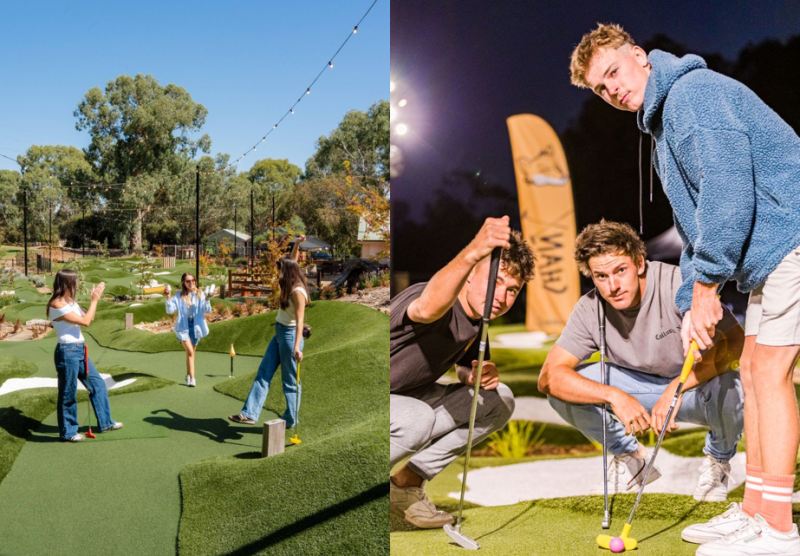
In a landmark move, Greenspace became the first international signatory of the R&A’s Women in Golf Charter, a significant achievement for a management company rather than a golf club.
“It wasn’t easy,” says Vlahandreas. “The charter wasn’t originally designed for companies like us. But after conversations with Golf Australia and the R&A, we were able to carve out a pathway. We felt strongly that if we could lead by example, others might follow—and they did.”
Indeed, since Greenspace’s commitment, other management companies in Australia and around the world have also signed on, reinforcing the momentum toward gender equity in golf.
But for Vlahandreas, the motivation is personal. “I became a ‘girl dad’ and started seeing the industry through my daughter’s eyes. I thought about my wife’s experience being turned away from a club over dress code, and I realised: if golf isn’t welcoming to them, what are we even doing?”
Alongside their Charter commitment, Greenspace Management has launched an internal working group for women in golf, with an external female professional with experience in recreational sport, but no golf background.
“She asks questions we wouldn’t think to ask,” says Vlahandreas. “That outside lens has been invaluable. It’s helped us challenge outdated norms and make better, more inclusive decisions.”
The company also proudly boasts an almost 50/50 gender split across its workforce—an achievement in an industry where female participation is often less than 10% in operations roles.
Inclusivity for Greenspace isn’t confined to gender equity, it’s about access, opportunity, and breaking down traditional barriers.
Their “Greenspace Gives Back” initiative provides pro bono support to smaller councils and regional clubs that may not have the resources for expert turf or golf club management. Teams are dispatched at no cost to deliver advice, hands-on support, and mentorship.
“We do it because it’s the right thing to do,” Vlahandreas says. “There’s no financial return. But it builds relationships, strengthens the grassroots, and keeps golf more accessible.”
This community-minded approach has garnered praise from golf development advocates, such as Mike Orloff of Golf Industry Central/Golf Industry Asia. “It’s one of the best examples I’ve seen of a company embedding community impact into its business model,” Orloff notes.
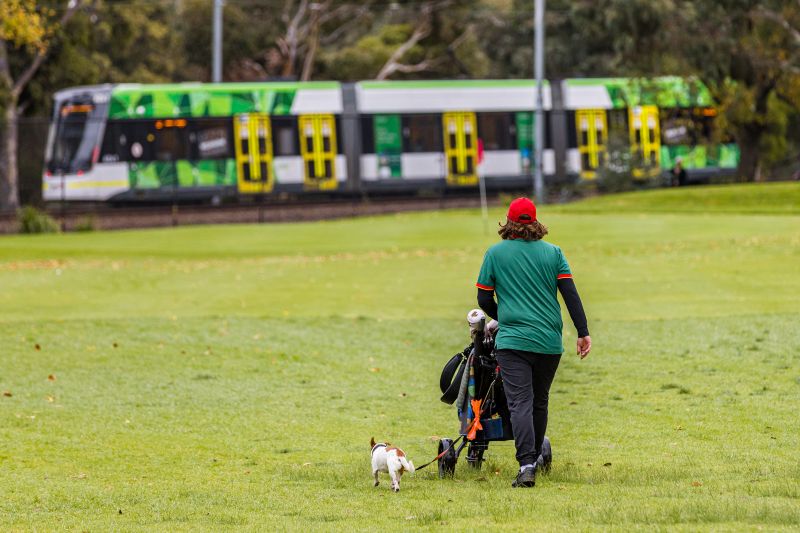
Perhaps nowhere is Greenspace’s vision more visible than at their SHANX Mini Golf venues, six bespoke facilities across Australia designed not just for golfers, but for everyone.
“These aren’t cookie-cutter mini golf courses,” Vlahandreas explains. “Each one is designed uniquely, often with local artists and community input. We’ve moved away from seeing mini golf as just a leisure activity; it’s a serious, scalable entertainment product.”
More importantly, it’s a tool for changing perceptions.
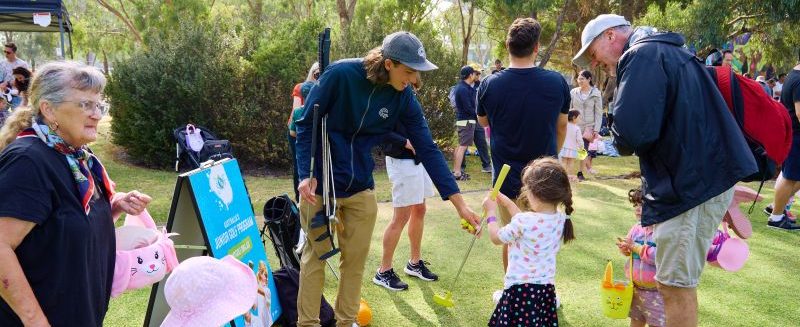
At Royal Park in Melbourne, community activations like free Easter egg hunts and Halloween Nights or at Regency Park their ‘Touch a Truck’ days have brought thousands of non-golfers through the gates.
“Sometimes people show up just for the event,” Vlahandreas says. “But then we hand their kids a putter, and something clicks. No pressure, no pitch, just fun. That’s how we break the stigma.”
They’ve also hosted corporate and charity events, integrated power for DJs and food trucks, and used creative design elements like dual-pin systems to accommodate both casual players and mini golf enthusiasts.
“It’s not about making everything easier,” Vlahandreas adds, “it’s about making it more.”
One of the most exciting developments is their approach to ‘new to golf golfers at their facilities. This focus is on women, girls and kids – a core growth segment for GreenSpace, and golf generally.
“We focus on making it a welcoming and barrier-free experience,” Vlahandreas says. We provide golf clubs, pull buggies, keep the language simple, and focus on having fun, not technical mastery. Just play golf.”
There’s no dress code. Clubs are free to borrow. The barrier to entry is virtually eliminated.
Vlahandreas compares it to the growing global trend of “radical hospitality” in golf. “People want to feel like they belong before they’re willing to commit. Greenspace understands that.”
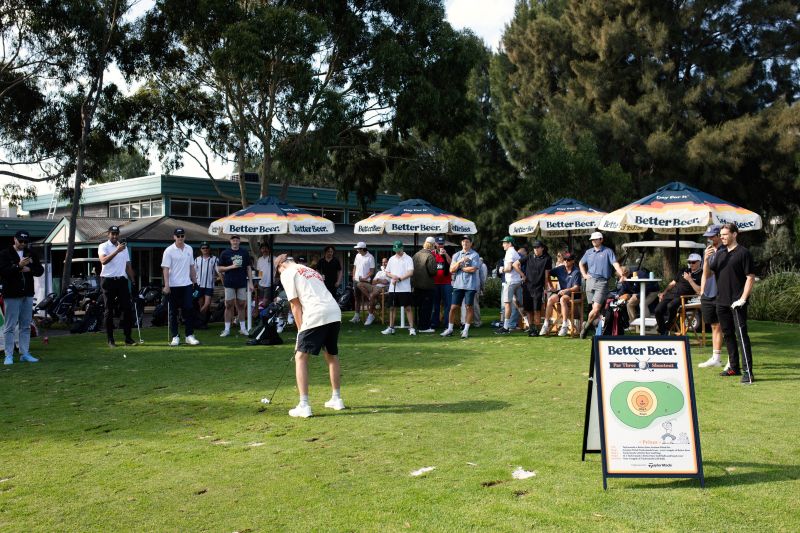
Their efforts haven’t gone unnoticed. The R&A’s “Small Spaces Guide” now references SHANX as a model for expanding golf in land-constrained markets, particularly in Asia, where space and accessibility remain key challenges.
But with recognition comes responsibility. “We’re not trying to be the biggest,” Vlahandreas says. “We want to stay true to what got us here: keep things simple, stay authentic, and always prioritise culture over corporatization.”
To that end, Greenspace remains selective about clients and contracts, just as they are about new hires.
“We turn down more work than we take on,” Vlahandreas admits. We’re passionate about golf and what we stand for in golf; and our partners need to back that with us, it’s a partnership after all.”
At its heart, Greenspace’s success stems from what Vlahandreas calls a “just give it a crack” philosophy, a culture that encourages experimentation, agility, and calculated risk.
“Golf isn’t life or death,” he says. “It should be fun. It should feel like play. That mindset allows us to try things other operators might avoid.”
And try they do. From user-generated mini golf design workshops to upcoming collaborations with music and food festivals, Greenspace Management is actively redefining what a golf experience can be.
Yet even as they evolve, their mission remains the same: make golf more welcoming, more inclusive, and more reflective of the communities it serves.
Because for Greenspace Management, managing greens is only part of the job. Changing the game is the bigger play.