By Mike Orloff:
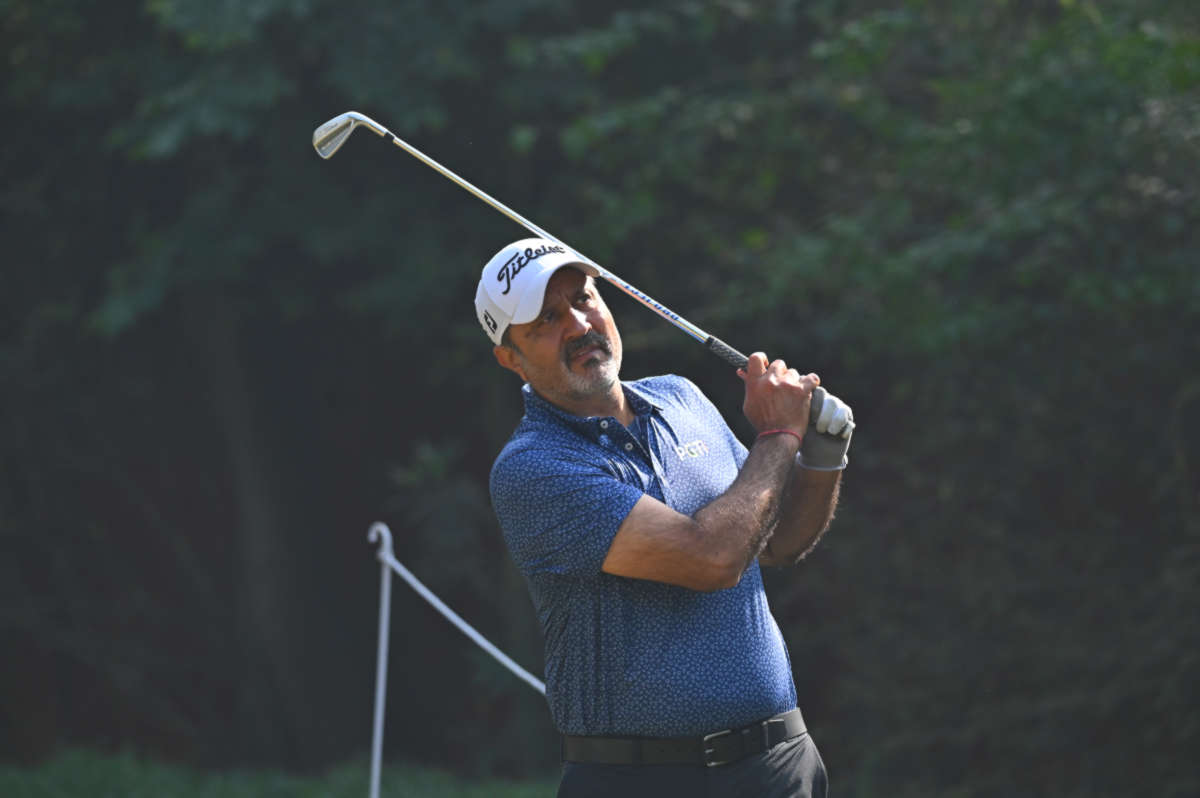
When you sit down with Amandeep Johl, you do not just talk about golf - you talk about momentum. From his early days hitting chopped-down wooden clubs as a seven-year-old in Chandigarh to co-founding the Asian Tour in 2004, serving as India’s National Coach, and now running the show as Chief Executive Officer of the Professional Golf Tour of India (PGTI), Johl’s entire life has been bound to the game.
Now leading the tour alongside Indian cricket legend Kapil Dev, Johl is executing a bold blueprint to turn Indian golf into a global power. In an online interview, Johl reflected on his journey, debunked common myths about the sport, and detailed how strategic alliances are transforming the game across the subcontinent.
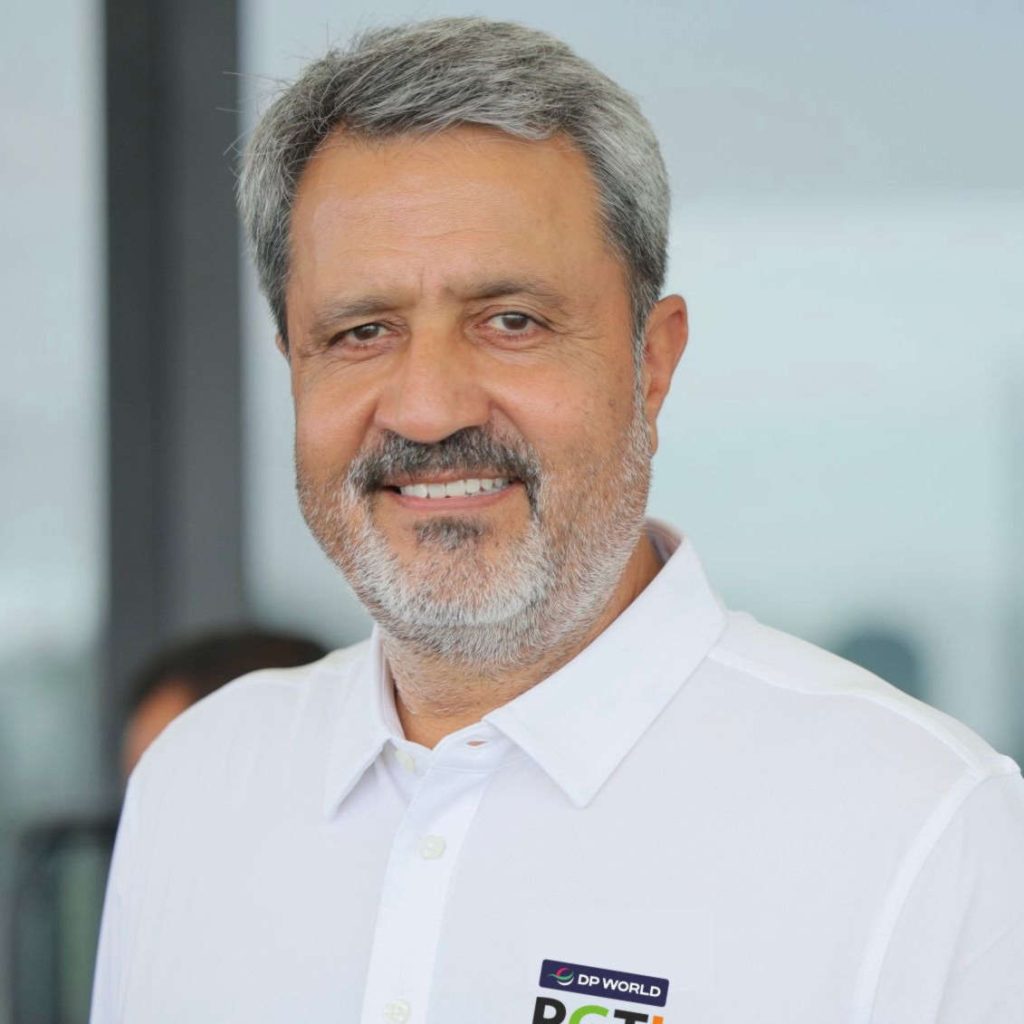 |
| Amandeep Johl Chief Executive Officer of the Professional Golf Tour of India (PGTI). |
Mike Orloff (MO): Amandeep, it is great to have a chance to talk with you. I want to start from the beginning. You have had a remarkable run as a player, coach, and now administrator. How did you first get into golf, and what path brought you to the tour?
Amandeep Johl (AJ): It has been a long journey. I started at age seven in Chandigarh. My father was a landscape architect, and we lived right next to a golf course - about 250 yards from the first tee. Jeev Milkha Singh was our back-door neighbor; we grew up together. School was only 500 yards away, with the course right in between, so we hopped on the course before and after class every day.
Back then, getting clubs or balls in India was nearly impossible. We took old clubs from older gentlemen, cut them down, and I played with a driver, a 7-iron, and a putter. I eventually played on the junior circuit and represented India as an amateur. But my father insisted I get a degree first, so I finished my engineering degree - I was always good at physics and math - before turning professional in 1990.
MO: You played on the Asian circuit for years and were heavily involved in shaping its modern layout. How did that lead into administration?
AJ: In 2003 and 2004, a few of us - Kyi Hla Han, Rick Gibson, Hendrik Buhrmann, Gerry Norquist, and myself - realized the existing Asian PGA was not serving the players well. We decided to build a true player-run organization, much like the European Tour.
I helped draft the original memorandum and articles of association with Old friend David Parkin, signed the official launch documents, and served as Chairman of the Tournament Players Committee. We grew the tour’s prize purse from $9 million to roughly $27 million in three years. Later, after I stepped away from tour play around 2009, I moved into coaching, became National Coach in 2015, Teaching Staff at the National Golf Academy of India, and eventually joined the PGTI Board before taking over as CEO.
MO: Looking at golf in India, access and cost are often highlighted as massive barriers. How do you approach opening up the game to new audiences?
AJ: Contrary to popular belief, golf in India can be one of the cheapest sports in the world to pick up. There is a persistent myth that it is strictly an elitist game left behind by the British. That is completely false.
At a venue like Delhi Golf Club, you can walk in for 300 rupees. For around $20 total, you can get a bucket of balls, rent a club, buy range time, and get an introductory lesson. We also have dozens of courses operated by the armed forces and local societies.
When I ran a public driving range in Delhi, our whole slogan was: "Come learn golf for $3." We gave free introductory lessons just to pull people in. The issue is not the entry cost - it is a lack of public awareness. Broadcast television, social media, and marquee events coming to India are finally changing that narrative.
MO: Since taking over as CEO, you have driven significant growth in prize money and corporate sponsorship. How have you convinced corporate partners to invest in the tour?
AJ: I looked at the most successful sporting body in our country: the BCCI in cricket. Their strategy was simple with the board bringing in influential figures across government, business, and politics. I adopted that exact strategy.
When Kapil Dev became PGTI President, we aggressively expanded our advisory leadership. We brought on Mr. Amitabh Kant, former CEO of NITI Aayog and India's G20 Sherpa. We added Mrs. Kiran Nadar, founder of HCL, and Mrs. Rachana Bahadur from Synchrony. We also engaged global Indian business leaders like Shantanu Narayen of Adobe and Nikesh Arora of Palo Alto Networks and Gurpreet Bakshi of Trantor.
When top figures from international commerce put their weight behind Indian golf, corporate sponsors pay attention. The initial trickle of support turns into a river, and eventually, a wave.
MO: You have also expanded international ties with the DP World Tour, the PGA TOUR, and the Official World Golf Ranking (OWGR). How does that benefit your domestic players?
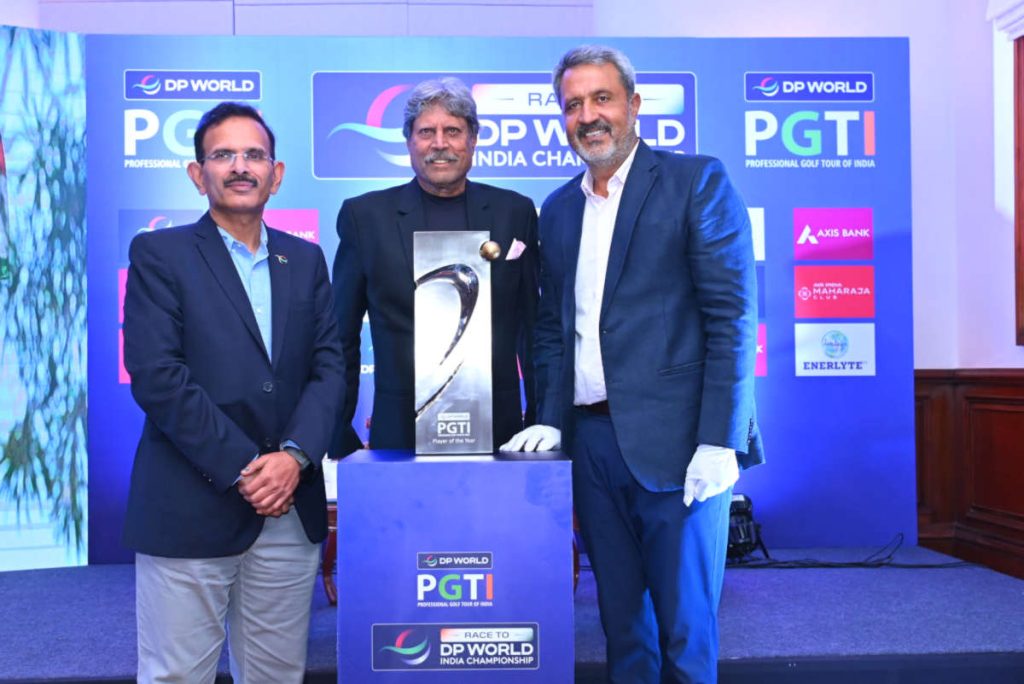 (L - R) Hemant Kumar Ruia, Country Manager Subcontinent (India), DP World, Kapil Dev, President, DP World PGTI, Amandeep Johl, CEO, DP World PGTI, pose with the DP World PGTI OOM Trophy.
AJ: A Tour only grows when you raise the standard of competition. We currently host joint-sanctioned events with the DP World Tour and Challenge Tour, and we are working to bring back Asian Development Tour events.
I personally extended invitations to the Sunshine Tour, the PGA Tour of Australasia, and the Korean Tour to send players to India during their off seasons. More international players on our leaderboards force our home-grown players to elevate their game. We also launched our 'NextGen' circuit - hosting $25,000 tournaments in tier two and tier three cities - to give 16-year-old professionals structured, three-day competitive play.
MO: You have also championed short-format concepts like "72 The League". How does a franchise format fit into traditional golf?
AJ: "72" is a magical number in golf - it is par for 18 holes and the total holes played in a standard event. In India, franchise leagues transformed cricket, football, and kabaddi. Golf needed its own fast-paced, team-based alternative.
"72 The League" brings a Ryder Cup-style format into a city-based franchise structure. We put teams through singles and four-ball matches over a condensed schedule, culminating in semi-finals and finals. It introduces team dynamics to an individual sport and appeals to a broader, modern audience.
MO: PGTI was built on a philosophy of being an organization "by the players, for the players". As you bring in major commercial stakeholders, how do you keep that player-centric ethos alive?
AJ: The product must always belong to the players. If you hand a sports tour over entirely to pure commercial interests, the essence of the sport gets lost.
When I wrote the constitution for the Asian Tour, and in our structure at the PGTI, we ensured that active players maintain a voting majority on the board. Non-player board members bring invaluable corporate, legal, and operational expertise, but the core decisions remain player driven. A tour for the players will always survive because it is backed by goodwill, passion, and institutional support.
MO: What does long-term success look like for you and Indian golf?
AJ: Success means producing global champions. In the 1990s and 2000s, guys like Jeev Milkha Singh, Arjun Atwal, and Jyoti Randhawa proved Indians could win anywhere. Today, women players like Aditi Ashok and Diksha Dagar are competing brilliantly on the world stage. We need our men's players doing the same on the PGA TOUR and DP World Tour.
To help, our board passed a landmark funding initiative: we provide up to $3,000 to cover entry fees for top PGTI players entering overseas Qualifying Schools, plus an additional $10,000 in financial backing if they secure their cards.
My broader vision is clear: India needs to add at least 10 golf courses a year for the next 30 years - adding 300 new facilities. When I meet state Chief Ministers and bureaucrats, I tell them golf courses are economic magnets that generate hundreds of millions of dollars in local commerce, infrastructure, and tourism.
Personally, golf is my lifelong passion. I do not have children of my own, so Indian golf is my baby. I intend to nurture it for the rest of my life.
MO: Amandeep, what you are building is incredible. Thank you for your time and leadership.
AJ: Thank you, Mike. It was an absolute pleasure.
Format Innovation: Integrating "72 The League" franchise play alongside traditional 72-hole stroke play tournaments.