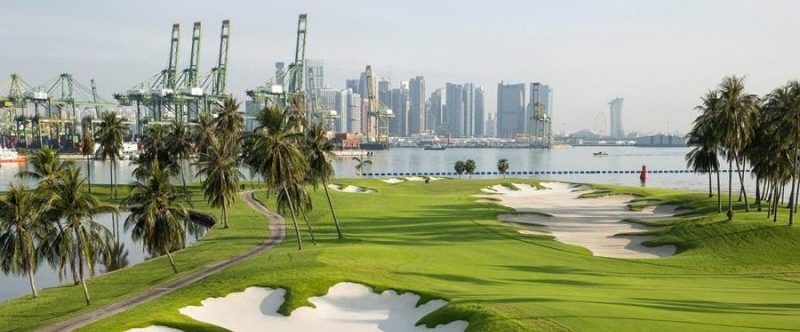
The successful staging of the 2026 Singapore Open at Sentosa Golf Club’s Serapong course marks a positive development for the local golf industry. With The Business Times as presenting partner, the event drew solid crowds and provided a platform for regional professionals, including winner Ham Jeong-woo of South Korea and runner-up Cameron John of Australia. Both players earned spots at The Open Championship.
This revival comes after periods of uncertainty, including sponsor challenges and the cancellation of the 2021 edition due to COVID-19. Earlier, Laguna National hosted the Singapore Masters, which attracted elite global talent such as Phil Mickelson, Rory McIlroy, and Sergio Garcia. While the return of the national Open is welcome, industry stakeholders are focused on its long-term sustainability alongside broader structural issues facing golf in Singapore.
Course Closures and Land Constraints
Land scarcity remains the defining challenge for golf operators, clubs, and professionals in Singapore. Over the past decade, several courses have closed or face imminent closure:
Projections suggest that by 2040, Singapore could be left with roughly six golfing entities: Sentosa, Tanah Merah (Tampines), Seletar, SICC Island (five nine-hole loops), Laguna National, Changi, and Sembawang. The future of the two 18-hole Sime Road courses (previously SICC) is under discussion, with potential public and private redevelopment options.
These reductions directly impact course maintenance teams, teaching professionals, retail operations, F&B outlets, and event hosting capacity. Fewer facilities increase pressure on remaining venues, leading to tighter tee-time availability and higher utilisation rates.
Talent Development vs Access Barriers
Singapore continues to produce competitive players. Shannon Tan has succeeded on the Ladies European Tour, James Leow ranks well on the Asian Tour, and emerging talents such as Troy Storm and Brayden Lee are gaining attention, building on the legacy of Mardan Mamat.
Weekend ranges and courses show strong junior participation, reflecting genuine grassroots interest. However, post-pandemic demand has made access more difficult. Many golfers report waking early for online bookings or arriving at clubs before dawn for weekend slots.
Without club membership, regular play has become challenging, pushing players toward Johor or the Riau Islands. This dynamic risks limiting participation among juniors, casual golfers, and non-members — precisely the segments the Singapore Golf Association (SGA) aims to grow. For industry professionals, reduced playing opportunities can constrain lesson demand, junior academy growth, and overall facility revenue.
Industry Considerations for the Future
Golf occupies significant land that competes with housing, infrastructure, and general recreation in a population exceeding six million. Industry operators recognise this reality. At the same time, golf offers unique attributes valuable in an ageing society: it supports lifelong participation, encourages walking, and facilitates social interaction in a way few other sports match.
Practical measures under discussion within the industry include:
The goal for operators and professionals is to prevent golf from reverting to a purely elite activity. Sustained accessibility supports broader participation, which in turn underpins demand for club services, equipment, coaching, and events.
The 2026 Singapore Open demonstrated clear public enthusiasm for high-level golf. For those working in the industry — from club managers and superintendents to teaching pros and event organisers — the key question is how to translate that enthusiasm into a viable, accessible ecosystem despite land constraints. Balancing national development priorities with the needs of the game will determine the trajectory of Singapore golf for the next decade and beyond.
For the original source of this article, please visit inquirer.net