By Mike Orloff
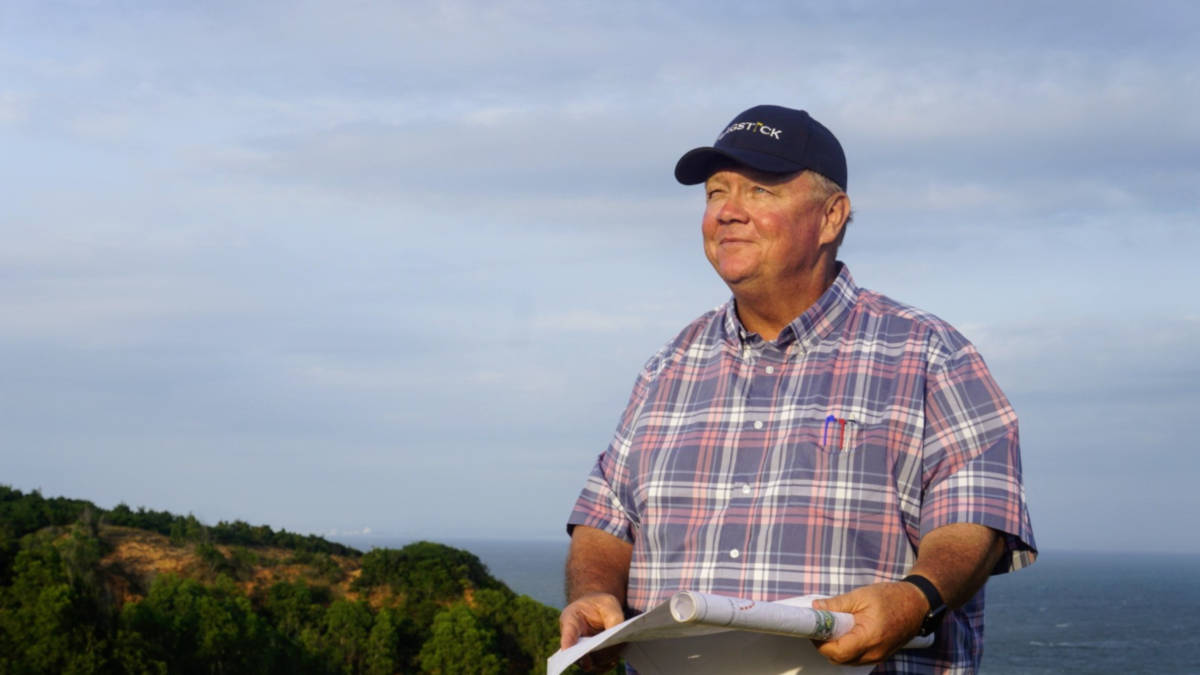
*Editors note: There are so many people in our golf industry doing amazing things, but not many people would know the real impact these people have on the various regions they work in. Ive known of Martin Moore for many years but having the chance to sit down with him for a coffee and a casual chat was daunting at first, but what a gentleman. And after interviewing him, what an amazing story of the huge impact he has had on the regions he has worked in and the industry he is part of. He has changed people’s lives to the good forever through the work he does.
Mike Orloff: Today I am sitting down with Martin Moore, for those who don’t know, he is the man behind Flagstick, one of the biggest golf course construction management companies in the world. But before we talk about managing huge projects across Asia, I want to go back to the beginning. Were you always a big golfer growing up?
Martin Moore: Not at all! I started at sixteen years old in Fort Myers, Florida, raking bunkers and mowing greens during the summer at Forest Country Club. I loved being outdoors. When high school ended, I knew one thing: I didn't want to go to a regular college. So, I went to work full-time on the course. Eventually, I worked my way up to the irrigation guy and spray technician.
Mike: How did you go from the crew to running things?
Martin: My superintendent told me if I wanted to make a real career out of golf course maintenance, I had to go to Lake City Community College. It’s a famous place in our industry - guys like John Holmes and Jim Sprankle and many other prominent Superintendent’s went there. I called them up, and they told me there was a two or three-year waitlist. I put my name down on the list and continued working.
Mike: And while you waited, you got into construction?
Martin: Exactly. An opportunity popped up to do course construction. I jumped on tractors and bulldozers and started finish shaping tees, fairways and greens for McCumber Golf in Naples, Florida and then for Tom Fazio in Tallahassee Florida. I was making about ten dollars an hour back in 1982 & 1983. To a young guy back then, that was huge money!
So when Lake City finally called and said, “Hey, your turn to come to school,” I said, “No thanks, I’m a construction guy now!” My father scolded me a bit, so I ended up going after all.
Mike: Do you regret going?
Martin: No, not at all. It gave me a strong foundation in agronomy. But the truth is, I just couldn't stand general course maintenance. Mow the grass every day, rake bunkers, Verticut, aerify, top dress, repeat repeat, repeat. It was too boring for me! I missed the big machines and building stuff and traveling to different places, different environments, different challenges.
Mike: So as soon as you finished school, you went right back into building?
Martin: Actually, I was working construction during weekends and summers while in school. Immediately after graduation in 1988, I was a twenty-six-year-old project manager building a course in St. Mary’s Georgia for Mark McCumber. I had worked with Mark for years and was totally content. Then, out of nowhere, a buddy of mine who worked for Jack Nicklaus called me up.
He said, “Hey, Nicklaus' company is hiring and looking for people to go overseas.” I told him I was happy where I was, but they offered to fly me down to Palm Beach for an interview. I thought, Free flight to South Florida? Jack Nicklaus? Why not?

Mike: You just wanted a free trip!
Martin: 100%! I had no intention of taking the job. But then I walked into the Golden Bear Plaza. In our world, that place was legendary. Jack Nicklaus happened to be in the office that day, so I got to meet him, shake his hand, and even have a brief chat with him as he was reviewing plans with one of his designers. I then met with Ed Etchells, and he looked at me and said, “We need you in Thailand.”
I told him I had to finish my current project in Georgia first. He said fine, and three months later, in May of 1990, I was on a plane to Asia.
Mike: What was that transition like, going from North America straight to Thailand?
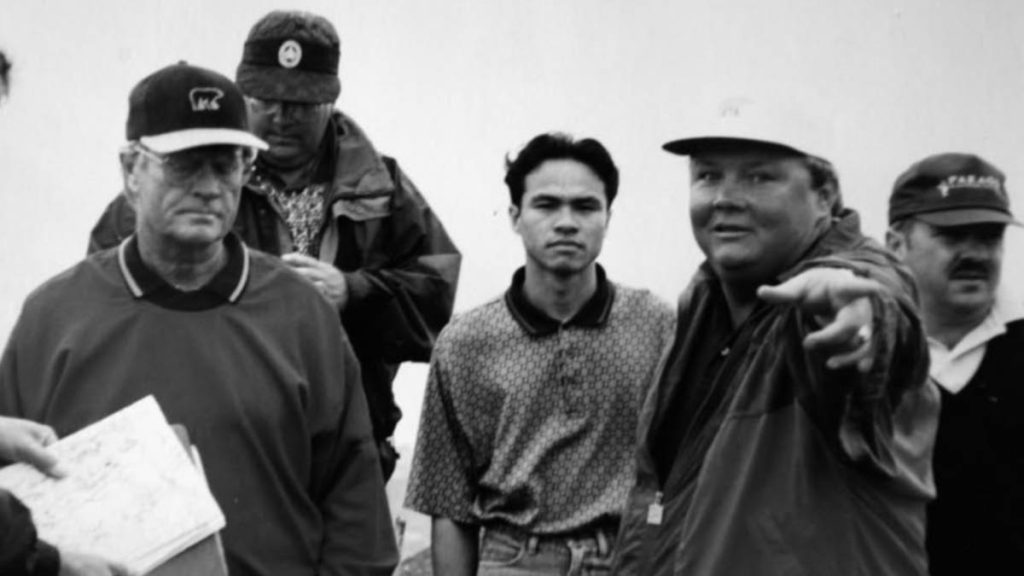
Martin: Total culture shock! Up until that flight, I had never been west of the Mississippi River! Suddenly I was in Kao Yai, three hours outside Bangkok, in a tiny rural village. I was the only foreigner for miles. I looked like an alien lost in a local village.
I’ll be honest with you, Mike - I spent some nights crying in my room thinking, there’s no way I can do this. I need to go home.
Mike: What kept you sane?
Martin: My truck and building my golf course! As soon as I got out on site managing the team or sitting on a bulldozer, I felt right at home. The hard part was going back to my little room at the back of a site office at night.
To make matters wilder, the owner of the project thought I wouldn’t feel safe out there in the middle of nowhere. So, he hired a guard to patrol outside my window all night. I’d be lying in bed, trying to sleep, and I’d see the silhouette of a guy holding an Uzi machine gun pacing back and forth just outside my room!
Mike: An Uzi?! That would keep anyone awake!
Martin: It freaked me out! After a week, the owner came by, and I asked him, “Do I really need that guard?” He said, “Oh, I just wanted you to feel safe!” I told him, “Please, take him away!”
Mike: How did you communicate with local workers when you didn't speak the language?
Martin: Lots of hand-drawing and hand-sculpturing in the dirt! I had three or four local Thai guys from the village running bulldozers. They knew how to operate the machines, but they had never seen a golf course in their lives and had no idea what a tee, green or bunker was. I’d point and draw, and they’d push dirt.
I also sat down every night in my office bedroom with a dictionary and forced myself to learn twenty new Thai words a week. Within six months, I knew most of the vocabulary I still use today. Now, I speak Thai fluently.
Mike: That team building turned into something special, didn't it?
Martin: It really did. Five or six of those guys who started pushing dirt for me back in 1990 for two hundred dollars a month are still with me thirty-six years later.
They’ve travelled with me to over a dozen countries, including Saudi Arabia. Now, they earn great money, own property and resorts back in their villages, and their kids are graduating from universities. They send me photos and say, “Mr. Martin, this is all because of you.” It brings tears to my eyes. But honestly, Flagstick wouldn't exist without their hard work and loyalty to me over the past 3 decades as well.
Mike: So you worked for Nicklaus for almost a decade across Thailand, China, Japan and the Philippines. How did Flagstick start?
Martin: In 1998, the Asian Financial Crisis hit. The Philippine Peso went from 26-to-1 to 52-to-1 against the US dollar almost overnight. Nicklaus had to close shop in the region. They laid-off almost everyone but told me to report to Mexico.
By then, I had a family with two young kids. I didn't want to move them to Mexico. I had been talking with Lee Schmidt and Brian Curley, two brilliant course architects. They had this idea: What if we set up a small in-house construction management company to make sure our designs get built properly? To be honest, Flagstick would not exist today if not for Lee and Brian as they are the ones who bought me in as a partner.
So, in 1998, Flagstick was born. At first, I was literally sitting on a bulldozer in the dirt, while the business paperwork to form the company was being prepared and executed.
Mike: Flagstick wasn't meant to be the global giant it is today, though?
Martin: Not at all! It was supposed to be a tiny firm exclusively doing Schmidt-Curley projects. But pretty soon, other top architects and developers started knocking on the door, saying, “Martin, come help manage our jobs too!”.
Lee and Brian were partners, so I understood their side. They were like, “Hey, we built Flagstick to help our designs, now Flagstick is helping our competitor designers!” After a couple years of going back and forth, we negotiated a buy-out deal. Around 2008, I took over ownership of the company.
Mike: Once you took over, the company expanded rapidly, especially across Asia. What was that growth like?
Martin: It was intense! We were working on major projects like the Mission Hills developments in China. At peak time in China, we had fifteen courses under construction at once. Opened offices in Kunming and Beijing. Overall, we’ve built over thirty courses in China alone.
Mike: Was doing business in China challenging?
Martin: China was a tough place to work, no doubt about it. Some owners were brutal to deal with - very demanding, unrealistic expectations, intense pressure. But you learn to adapt. Managing a project in China is totally different from managing one in Thailand or Vietnam. You have to read the developer's personality and adjust your style accordingly.
Mike: China’s market has slowed down, but Vietnam has exploded recently.
Martin: Vietnam has been incredible. I initially came here about twelve years ago for our first project, Legend Hills in Hanoi. At the time, I had no idea Vietnam was going to turn into a massive golf hub. At one point, we had seven projects running in the country simultaneously. Out of roughly eighty-five courses in Vietnam, Flagstick has managed the construction on about twenty percent of them!
Mike: And what about the new frontier places like Laos and Cambodia?
Martin: They’re moving fast! Due to the moratorium of building new golf courses in China, Chinese developers are investing heavily in Laos and Cambodia right now. I do not believe it will reach the massive scale of Vietnam or Thailand, but seeing four or five new quality courses built a year in those places is certainly realistic.
Mike: You've built over a hundred courses in around twenty countries working with nearly twenty different design architects. What's the secret to selling Flagstick’s services to these ultra-wealthy developers?
Martin: I’ll tell you a secret: I am a terrible salesman! I really am.
My strategy when I walk into a boardroom with a project owner is just to talk straight forward technical construction. I talk way over their heads about schedules, budgets, earth-moving volumes, drainage specifications, shaping details, etc. They realize very quickly, Okay, we don’t understand building golf courses and this guy actually knows what he’s doing.
More than that, our best sales people are the golf course architects. When you build a course right, help make the architects designs look good, and save them from the many headaches on site, they recommend you to every new owner they meet.
Mike: You mentioned earlier how proud you were of your original Thai crew. How are you handling the labor shift now?
Martin: Those original Thai guys are getting close to my age now. They’re wealthy, have enough money to retire and are ready to enjoy life, though I tell them they can't retire until I do!
Over the past couple decades, we’ve trained a brilliant new generation of local shapers, construction managers, engineers, and administrators in Vietnam, Indonesia, China, and now even Pakistanis.
Some companies bring in full teams of Western expats. Flagstick has built a model to mix our management and construction teams with a few experienced expat veterans, together with loyal locals that we have trained for many years the “Flagstick way”. The result is efficiency in costs, while maintaining world class quality construction. In reality, this structure has been a huge factor with our continued success.
Mike: Martin, you’re sixty-three now. You've been in the dirt for over forty years. Are you planning to sit on a beach anytime soon?
Martin: Never! That is a fact: I will never retire. I will work until I physically cannot do it anymore.
During the COVID-19 lockdowns, I was stuck at home in Thailand for six months. It was the most boring period of my life! It proved to me that sitting around isn't for me.
Mike: But you do want to slow down a little, right?
Martin: Yes, slow down, but not stop. A couple years ago, I brought on Gavin Reid as a partner. He’s done a fantastic job taking over full management on several major projects. Having him allows me to spend a few less days on airplanes and a few more days at my home in Thailand.
I haven't been back to the United States in seven years, and I don't plan to go back. Asia is my home. My business works here because inexperienced owners and local contractors need our guidance.
Mike: Looking back from that 16-year-old kid raking sand bunkers in Florida to running Flagstick today, how do you feel about the journey?
Martin: I feel incredibly blessed. I love the game, I love the great people in our industry, I love creating something permanent out of native sites that are all different in character. In forty years, I’ve built lifelong friendships across the globe. As long as there’s dirt to move and a new course to build, I’ll be out there chasing the job.
*For some real insight into Martin and China, have a read of this book.
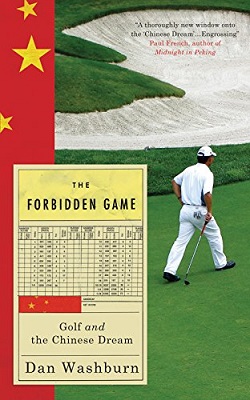 |
The Forbidden GameThe Forbidden Game: Golf and the Chinese Dream is a non-fiction book by Dan Washburn, an American journalist who was based in Shanghai, China from 2002 to 2011. It was published by Oneworld Publications in 2014. In the book, Washburn uses the contradictory emergence of golf as a "metaphor for modern China." The Financial Times named The Forbidden Game one of the best books of 2014. |