
For private clubs across the APAC region, the prospect of replacing a core technology system that has been in place for a decade is often viewed with trepidation. The fear of operational downtime, the complexity of data migration, and the risk of staff friction can paralyze decision-making, even when legacy systems have reached their end-of-life.
However, a technology transition does not have to be a high-stakes gamble. When one of the world's most prestigious private clubs—the Tokyo American Club—faced this exact crossroads, they turned to Northstar Technologies.
As a Platinum Club of the World with over 12,500 members and a 400-plus-person workforce, Tokyo American Club is a singular operation in Japan. Operational excellence is not merely an aspiration; it is a fundamental mandate. When their legacy software reached end-of-life, leadership knew they needed more than just a software vendor; they needed a strategic partner capable of securing enterprise-grade PII data and driving massive operational efficiencies, and they chose Northstar.
By partnering with Northstar, the Tokyo American Club has built more than a database; they have constructed a blueprint for digital sovereignty. This collaboration proves that when world-class institutions demand zero-error performance to protect sensitive diplomatic and member data, Northstar provides the technological foundation required to achieve it, turning complex enterprise scale into a competitive operational advantage.
For prestigious private clubs in major international hubs like Hong Kong, Singapore, and Tokyo, technology is the backbone of member trust. At the Tokyo American Club, the stakes are elevated. This is a hospitality operation along with a critical social and diplomatic anchor. For General Manager Dustin McAvoy and Financial Controller Don Suranga, the operational pressure to maintain seamless service is absolute.
When the club’s decade-old legacy platform reached its end-of-life, the challenge went far beyond standard software procurement. Leadership had to solve for two non-negotiable enterprise constraints:
“The biggest thing is membership, because it's PII data, so secure, and handling the membership database is the biggest concern we had,” explains Don Suranga, Financial Controller at the Tokyo American Club. “And we heard that in North America, most clubs are using Northstar, and the majority of our members are from America. So the board strongly favored going to something most clubs are using.”
Ultimately, for an institution as singular as the Tokyo American Club, selecting a technology partner was a strategic imperative. It required a platform that could safeguard member trust while preserving the integrity of a vital social institution, making Northstar the clear choice for the path forward.
The anxiety surrounding "system cutovers" is real, but Northstar’s approach is built to dismantle that fear. The Tokyo American Club’s successful transition serves as a blueprint for how Northstar moves beyond simple software implementation to become an extension of a club’s operational team.
The secret to this success wasn't just in the platform's robust architecture; it was in Northstar’s "Embedded Implementation" model.
The process of migrating data was, in essence, a "Cultural Audit." Rather than simply porting over decades of legacy data, some of it messy, much of it redundant, the club used the migration as an opportunity to standardize how they work. This rigorous cleaning process ensured that the new system wasn't just "the old way on a new screen," but a genuine optimization of institutional workflows.
At the time of implementation, rather than managing the transition remotely, Northstar’s implementation manager embedded himself directly into the daily life of the club. By working from reception desks, pool decks, and common staff corridors, the Northstar team bridged the gap between technology and the frontline staff. The Northstar team followed a bottom-up approach, ensuring that the staff who actually use the software every day are well-equipped to use the software seamlessly.
“He started to become our staff. I felt like, oh, he’s really connected with the staff,” says Don Suranga, Financial Controller at Tokyo American Club. “The staff also started freely commenting to him and asking for support, so we don’t need to be so directly involved in solving the issues. That was really helpful for upper management.”
This approach ensures that adoption isn't forced from the top down; it is nurtured from the ground up, minimizing friction and maximizing user confidence.
For clubs, the true measure of a platform is how it performs under pressure. Northstar’s platform was engineered to handle the scale of a club with thousands of members, and the results at Tokyo American Club were immediate and transformative.
Under their legacy system, the end-of-month billing process at the Tokyo American Club was a high-stress event. The finance team had to dedicate an entire computer terminal to run the billing batch for 24 continuous hours. Because the system was so dated, the hardware was essentially locked during this time, and a finance team member had to babysit the machine to ensure a power fluctuation or software glitch didn't corrupt thousands of member statements.
By moving to Northstar, that 24-hour marathon was compressed into just 30 to 40 minutes, completely eliminating the hardware bottleneck and removing the risk of data failure during critical monthly cycles.
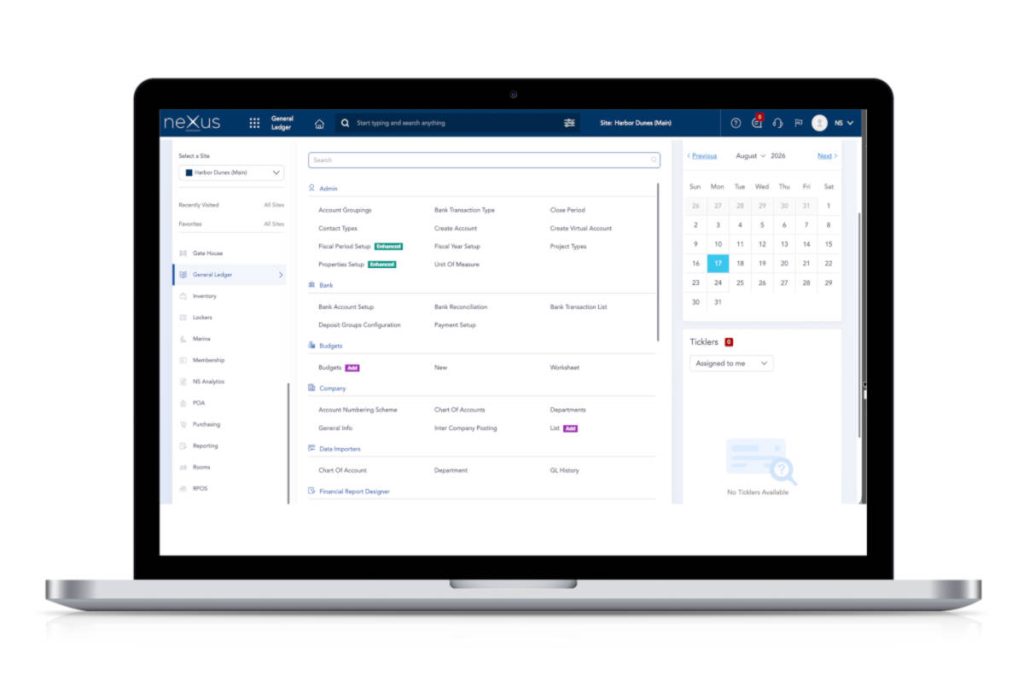 By unifying operations onto a single, modern database, Northstar delivered results that fundamentally changed the club's financial and administrative capabilities:
These efficiencies have turned financial reporting from a rear-view mirror exercise into a real-time management tool. As General Manager Dustin McAvoy notes: “Our board is receiving [financial data] faster and feels much more like they have a finger on the pulse.”
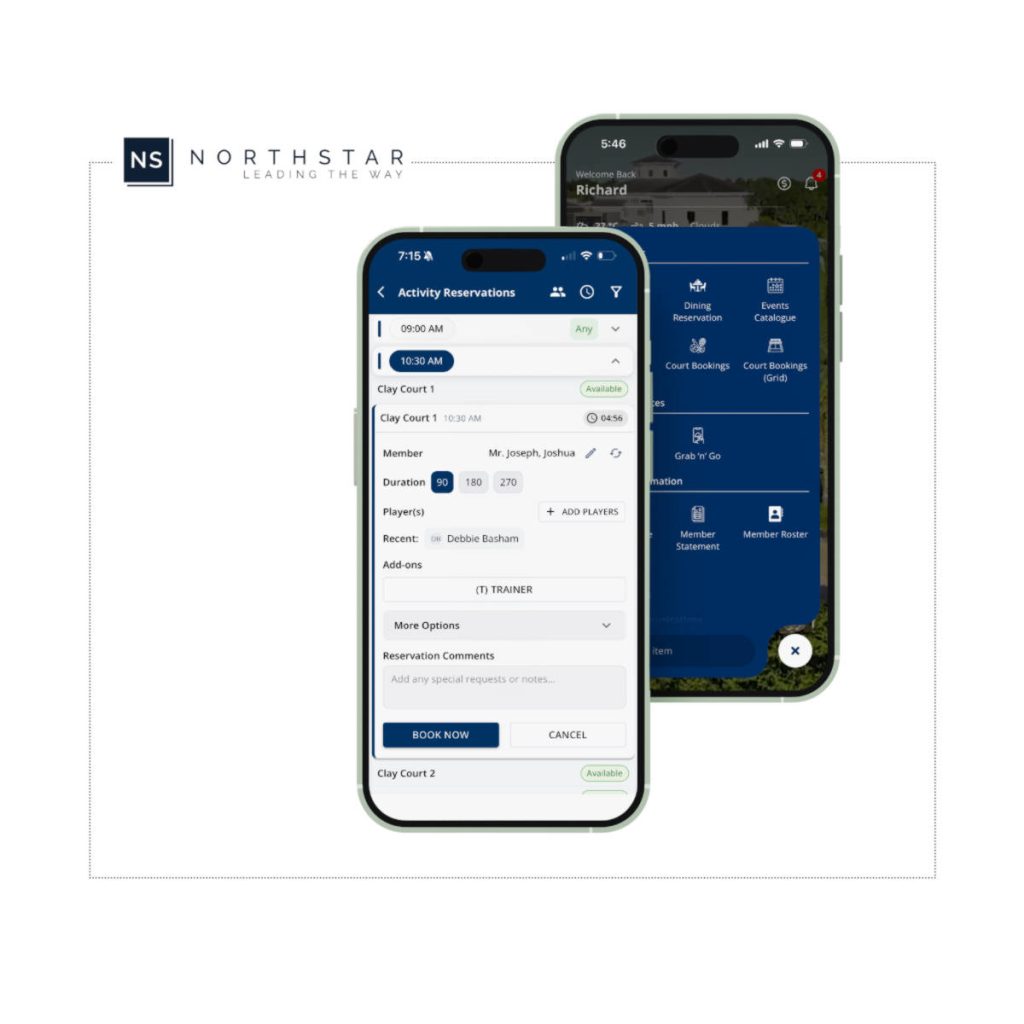
Northstar’s impact goes beyond the back office. By providing a modern, native mobile member app alongside a unified web experience, Northstar helped the Tokyo American Club modernize its member engagement—introducing push notifications, personalized profiles, and simplified booking—without alienating members who prefer traditional print and paper touchpoints.
Before Northstar: Securing a court or class time was a manual, high-friction process. Members had to call the club and speak with staff, a bottleneck that frequently led to long hold times, miscommunications, and the recurring risk of overlapping bookings or double-assignments.
With Northstar: Now, members have the freedom to browse schedules and book their own time slots or courts in just two clicks via the member app. This self-service capability not only empowers the member but eliminates administrative back-and-forth, enhancing the overall member experience while giving staff time back to focus on high-value interactions.
But for an institution as complex as the Tokyo American Club, the digital mobile experience was simply the first layer of a broader strategic shift.
The transition was never about the finish line; it was about the starting blocks. With core financial and reservation systems now running on a single, secure database, the club is already pivoting to the next horizon. The focus is shifting toward procurement automation and self-service analytics, transforming the finance department from a historical record-keeper into a real-time driver of the club's bottom line. For the Tokyo American Club, Northstar is the infrastructure that will enable the next generation of leadership to innovate without technological limits.
The Tokyo American Club experience demonstrates that the right technology partner is the deciding factor in digital success. For clubs in the APAC region navigating the complexity of modernization, Northstar provides:
"I would always recommend advancing technology and efficiencies and not being afraid of change," says McAvoy. "The investment you make pays itself off tenfold over time."
Northstar didn’t just provide a platform; they became the silent engine driving this evolution. For private club leaders across the APAC region, the lesson here is about the decision to move from a legacy of stagnation to a future of scale. When you are responsible for an institution that defines the standard for its entire country, you don't look for a vendor to sign a contract with. You look for a partner you can trust to build your legacy with. And that is the Northstar advantage.